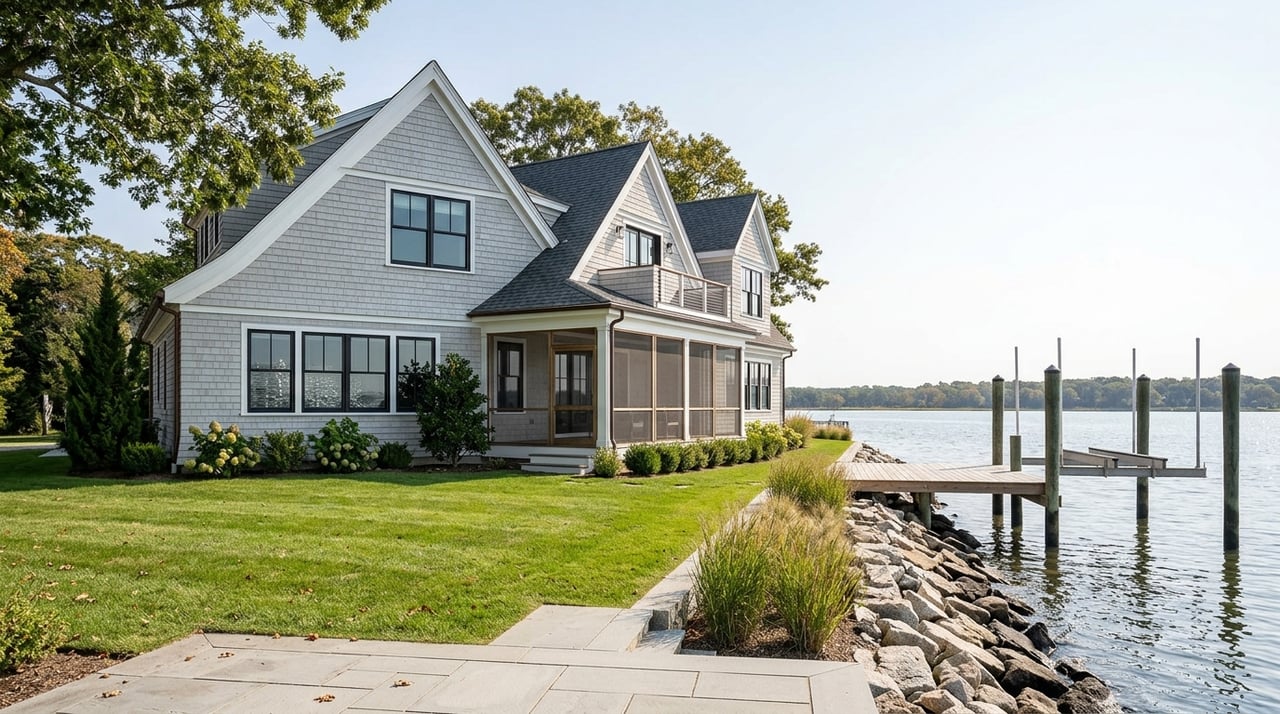
Annapolis Waterfront Home Value: What Buyers Should Know
May 7, 2026
May 7, 2026
If you have ever wondered why two Annapolis waterfront homes can feel similar at first glance but sell very differently, the answer usually comes down to details. Waterfront value here is shaped by much more than a water view. In Annapolis, location, boating access, shoreline features, flood exposure, and buildability all play a big role in what buyers will pay. Let’s dive in.
In Annapolis, “waterfront” is not one single market. The city’s shoreline stretches across the Severn River system, Spa Creek, Back Creek, Weems Creek, and other tributaries, and each setting appeals to a slightly different buyer.
That matters because buyers do not value every waterfront setting the same way. Some want quick access to the Chesapeake Bay, some prioritize a protected creek for docking, and others care most about harbor views or proximity to downtown amenities. A home’s exact placement on the water often influences value as much as the house itself.
Anne Arundel County describes Annapolis as a center of recreational boating activity, and the geography supports that reputation. Whitehall Bay opens directly to the Chesapeake, while Spa and Back Creeks are lined with marinas and boat yards.
Because of that, open-river, harbor, and protected-creek properties do not typically trade the same way. A buyer looking for broad views and easier bay access may value a property differently than someone who wants calmer waters and a more sheltered pier location.
Even within the same general area, value can shift from one street, cove, or shoreline orientation to another. The tidal Severn is not uniform, and county sources note that some stretches are deeper and more comfortable for recreational boating than others.
That creates a very local pricing pattern. In waterfront real estate, small differences in navigation, exposure, and access can create large differences in buyer interest.
A waterfront address gets attention, but usable access is what often drives stronger value. Buyers tend to look closely at whether they can actually enjoy the water in a practical way.
The Appraisal Institute notes that waterfront buyers care about both access to the water and views of the water. Fannie Mae also treats view, access, and location as specific appraisal factors, not just lifestyle extras.
A dock does not automatically raise value. Its impact depends on whether it is usable, what rights come with it, its condition, and whether water depth supports the way a buyer wants to use the property.
Anne Arundel County also notes that private pier use is limited to the owner, occupant, or invited guest with the proper recorded agreement. So when buyers assess a dock, they are not just looking at whether one exists. They are looking at how it functions and what legal use is allowed.
On the Severn, county information shows that the first stretch above Annapolis is about one-half mile wide with depths around 25 feet, while areas farther upstream become shallower. Some anchorages off Horn Point are moderately deep, and some channel areas do not allow anchoring.
For buyers who boat, those details matter. Easier navigation, more reliable docking, and fewer limitations can support stronger interest and, in many cases, stronger value.
Waterfront value is also tied to the lot itself. More frontage, better orientation, and a more usable shape can all make a property more attractive.
The Appraisal Institute notes that when other factors are similar, more linear feet of waterfront can support higher value. More frontage may improve views, privacy, and access options, which can broaden buyer appeal.
On waterfront property, the lot line and shoreline rules matter. Anne Arundel County defines a waterfront lot by the mean high-water line, and the shoreline side is treated as the front yard.
That may limit how much of the property is practically usable for additions or site improvements. A large lot on paper may offer less real flexibility than buyers expect once setbacks, slope, and shoreline conditions are considered.
County zoning guidance points to issues like irregularity, narrowness, shallowness, and exceptional topography as important physical conditions. That means lot geometry can be just as important as total acreage.
A property with better dimensions and more functional outdoor space may compete better than a larger but awkward lot. For sellers, this is one reason waterfront pricing needs a very property-specific approach.
One of the biggest waterfront value drivers in Annapolis is buildability after local regulations are applied. Much of the waterfront is subject to Critical Area rules.
Anne Arundel County defines the Critical Area as land and water within 1,000 feet landward of tidal waters or wetlands. The Critical Area Buffer extends 100 feet landward from the mean high-water line and tributary banks, and disturbance in that buffer generally requires an approved variance.
Buyers often pay attention to what a property is today and what it can become later. If future additions, hardscape changes, or shoreline modifications are limited, that can shape the price they are willing to pay.
This is especially important for older waterfront homes in Annapolis. A charming property may still face tighter constraints than a buyer realizes at first glance.
Shoreline improvements are regulated, and Anne Arundel County notes that the Maryland Department of the Environment handles bulkhead and shoreline permitting. County grading or building permits may also be required depending on the work.
Well-organized permit history can make a real difference during a sale. It helps buyers understand what has been done, whether improvements were approved, and what they may be able to do in the future.
In Annapolis, flood exposure is not a side issue. It is a core value factor.
The city says Annapolis is susceptible to nuisance flooding, most often from March to September. It also identifies downtown Annapolis and Eastport at the mouth of the Severn River, Annapolis Harbor, and Spa Creek as some of the lowest-lying areas.
The city also reminds residents that flood losses are not covered under standard homeowners insurance. For buyers, that raises practical questions about risk, insurance costs, and long-term ownership expenses.
Because of that, resilience work can influence value. Buyers may look closely at drainage, elevation-related improvements, shoreline protection, and the overall condition of the site.
On a waterfront property, condition includes more than the roof, windows, or kitchen updates. The shoreline, dock, bulkhead, drainage, and site adaptability all play a role in how the property is judged.
Anne Arundel County also notes that shoreline protection is site-specific and that each site generally requires a customized solution. A property with well-documented maintenance and thoughtful resilience work may feel more secure to a buyer.
Waterfront homes are not all served the same way. Anne Arundel County notes that some waterfront homes still use septic systems, while some communities have converted to public sewer.
That makes utility type part of the value conversation. Buyers may also want to understand easements, service history, and whether site conditions affect utility performance or future plans.
For a seller, organized records can reduce friction during the transaction. Useful items often include permit records, shoreline work history, utility information, dock specifications, and flood-mitigation details.
These documents help support marketability because they answer the practical questions buyers tend to ask when evaluating a unique waterfront property.
Even though value is driven by objective property details, Annapolis also has a strong lifestyle pull. Downtown is known as a walkable historic waterfront area with restaurants, shopping, City Dock, and the Naval Academy nearby.
The city also notes that Annapolis Harbor is home to Ego Alley, where boaters can dock and dine. For many buyers, that kind of access and atmosphere adds to the appeal of living on or near the water.
Annapolis has a dense boating ecosystem, with public and private moorings, docking options, boat ramps, water taxi access, paddle-craft access, and marinas along the coastline. That convenience helps explain why some buyers are willing to pay more for a property that connects easily to the lifestyle they want.
In other words, value is not just about house size. It is also about how smoothly a home fits daily waterfront living.
If you are preparing to sell a waterfront home in Annapolis, the goal is to show buyers the full picture. That means presenting both the emotional appeal and the practical strengths of the property.
A polished waterfront sale usually starts with clear pricing, strong presentation, and organized documentation. It also requires a realistic understanding of how your location, access, condition, and constraints compare with other waterfront options.
Before you list, it helps to pull together:
These details help buyers and appraisers evaluate the property more confidently. They also help your home stand out for the right reasons.
Waterfront homes in Annapolis are highly individual. Two homes with similar square footage can have very different value because one has better frontage, easier boating access, lower flood concerns, or more usable lot area after regulations are considered.
That is why waterfront pricing needs local, property-specific judgment. When you understand the factors that really drive value, you can make better decisions whether you are buying, selling, or simply planning ahead.
If you are thinking about selling or want a clearer read on how your Annapolis waterfront property fits today’s market, Michelle L Blanchard can help you position it with the kind of local waterfront insight that matters.
Stay up to date on the latest real estate trends.




Backed by award-winning performance and deep local expertise, Michelle delivers knowledgeable guidance, strong negotiation, and a seamless experience for buyers and sellers across the Baltimore region.